
Manual timing takes time
Stopwatch logging and repeated inspections take time away from IE and process teams, delaying issue detection and review.
Efficiency gapNon-invasive AI vision tracks robot motion and calculates takt, utilization and waiting time. IE and process teams can identify bottlenecks, validate changes and bring intelligence into daily production workflows.
Automated equipment and systems are already in place, yet manual timing, fragmented data and long analysis cycles still slow improvement. Bringing continuous, reviewable shop-floor data into IE workflows is a practical way to improve existing lines.
Stopwatch logging and repeated inspections take time away from IE and process teams, delaying issue detection and review.
Efficiency gapManual sampling, inconsistent definitions and scattered records make it hard to build continuous, comparable takt data for improvement.
Data gapEquipment states, waiting time and process takt are split across video and operator experience, making analysis slow to reconcile.
Analysis gapWhen a line cannot stop and systems are tightly coupled, a quantified baseline helps teams prioritize improvements and assess investment.
Decision gapStarting with machine-motion data, the workflow connects process recognition, takt analysis, expert review and improvement validation. AI provides continuous evidence and analysis support; IE and shop-floor teams retain process judgment and operational responsibility. Role-based access and expert review govern how findings return to rules and baselines.
Connect camera streams
Define the line, process and equipment
AI vision tracks motion
Record processing, transfer and waiting states
Aggregate cycles, utilization and waiting time
Surface anomalies and analytical
findings
Validate causes with process knowledge
Define improvement plans and validation
criteria
Compare performance before and after
Authorized IE and shop-floor reviewers update
rules and baselines
Compare equipment, processes and time periods with tools for motion states, cycle summaries and exception playback.
Use AI vision to identify robot and mechanism motion, then label each asset, state and duration.
Reviewable state dataCalculate average takt, cycle count, average waiting time and current waiting time from equipment motion.
Automatic cycle summariesLocate analysis clues across cycle duration, equipment utilization and process waiting patterns; review supplier takt commitments and improvement opportunities.
Findings reviewed by operationsView equipment states and cycle history in utilization charts and takt plots, then replay a specific cycle to investigate anomalies.
Trace anomalies to the lineFor automated lines and semi-automated workstations. Define the equipment, observation period and business goal, then validate recognition and data usability with the shop-floor team.
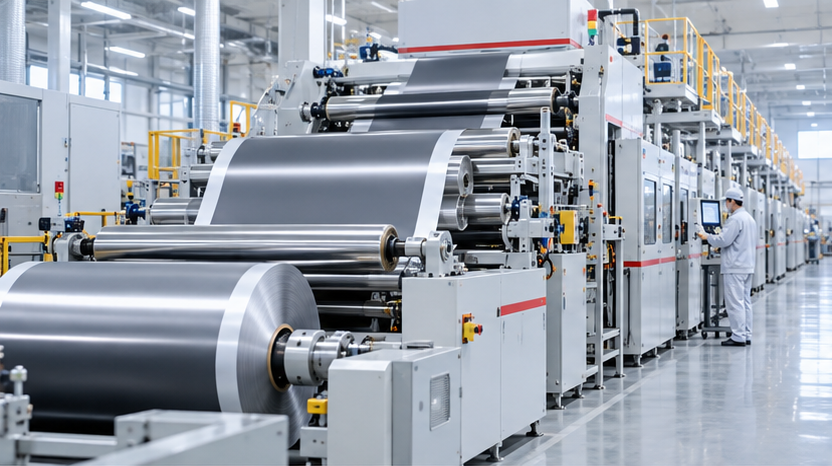
Review speed alignment, roll changes and equipment waits across coating, calendering, slitting and die cutting.
Coating · Calendering · Slitting · Die cutting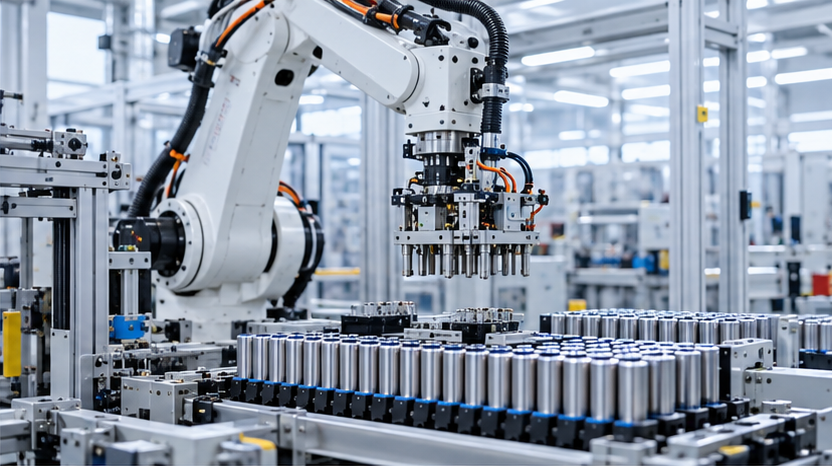
Identify cycle variation and waiting areas across stacking or winding, casing, welding, filling and sealing.
Stacking · Welding · Filling · Sealing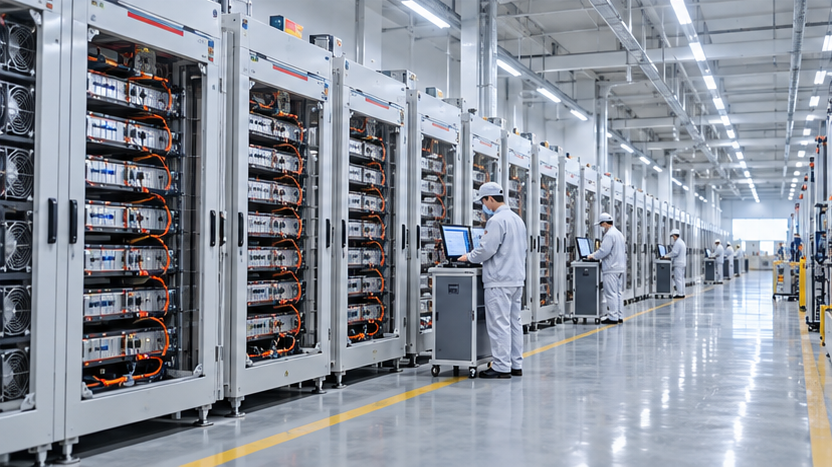
Analyze batch lead time, equipment idle time and queueing across loading, aging, capacity testing and grading.
Loading · Aging · Testing · Grading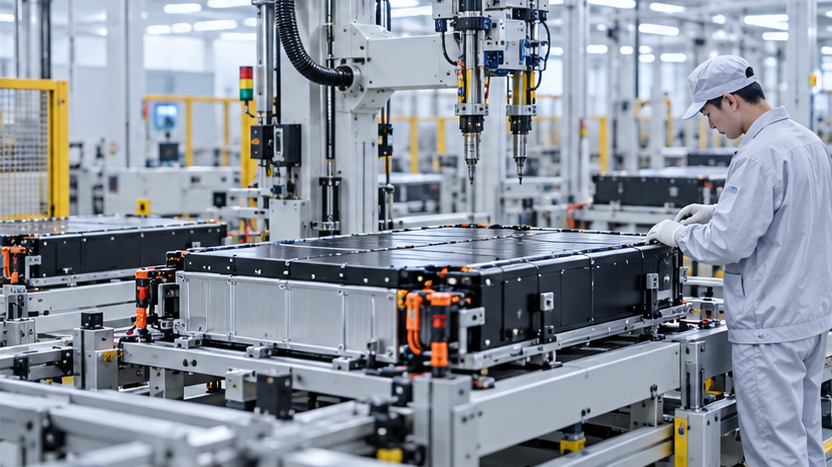
Analyze human-machine takt variation across cell sorting, module stacking, welding, EOL testing and pack assembly.
Sorting · Stacking · EOL · PackVideo streams and line configuration feed vision inference, state analysis and cycle statistics. Results return to monitoring, review and improvement workflows.
Bring waiting time, cycle variation and equipment utilization into one view to reduce manual timing and data reconciliation.
Compare before-and-after performance using continuous cycle data and consistent metrics, with IE and shop-floor teams reviewing the outcome together.
Feed verified anomalies, expert judgment and improvement results back into datasets, process knowledge and analysis rules to build reusable organizational capabilities.
Start with a critical process. Bring AI analysis and IE review together to identify bottlenecks, validate changes and return proven findings to production rules.

Scan for solution details
or expert consultation